

Dear readers, this post is free for all to read! It’s also the first of what I anticipate will be several on the theme of the upcoming NATO summit in Ankara, so consider becoming a paying subscriber today if you don’t want to miss anything. I am deeply grateful and encouraged by each and every one of my subscribers for their support!
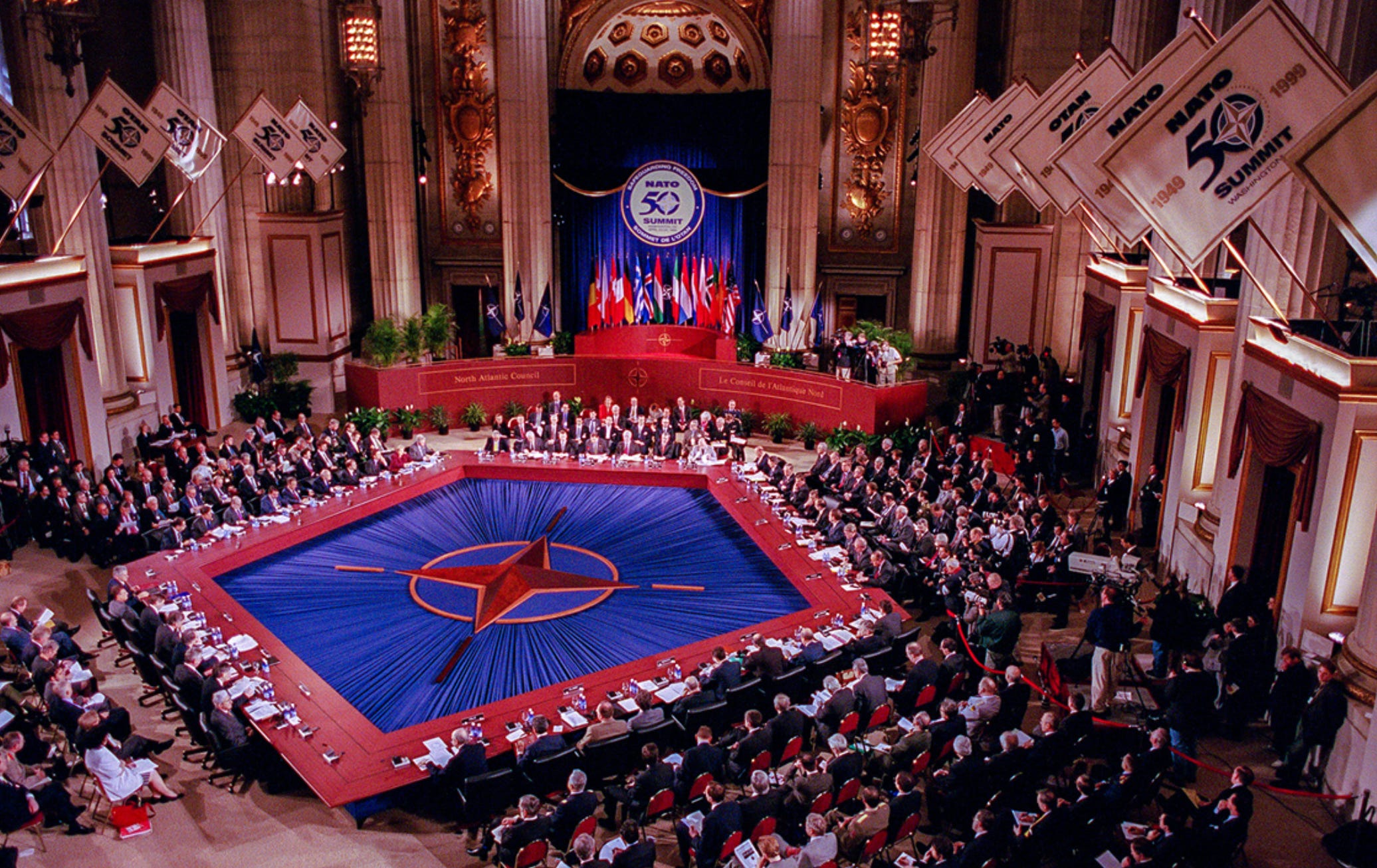
Few periods in NATO’s 77-year history have been more disorienting for the alliance than Trump’s second presidency. True to Trumpian form, the past 15 or so months have been whiplash-inducing and unpredictable. As Trump was sworn in for another term in January 2025, there was widespread panic among Atlanticists that Trump would quickly end the war in Ukraine on terms favorable to Russia. Trump and Zelenskyy’s televised spat in the Oval Office last February reinforced this fear.
But at some point over the six months that followed, something changed. Trump’s rhetoric on NATO was unusual and belligerent, but his actual policies turned out to be more conventional than many feared. Trump did not “end the war in Ukraine in 24 hours” (as he’d promised on the campaign trail.) Instead, he began expressing his “disappointment” with Putin and threatened to impose crippling tariffs on Russia. NATO members (with the exception of Spain) agreed to raise their defense spending to 5% of GDP, something Trump touted as a victory at last June’s NATO summit in The Hague. Indeed, Trump-NATO relations looked to be on more solid ground at the start of last summer. The longstanding liberal insistence that Trump was being puppeteered by Vladimir Putin started looking almost like it had been intentional misdirection: there was a foreign leader who held undue sway over US policy, but it was Benjamin Netanyahu.
Far more damaging to NATO cohesion than Ukraine were Trump’s repeated threats to annex Greenland. The idea that the most powerful NATO member state could seize territory belonging to one of its pretty little Scandinavian allies was truly shocking and unprecedented. A few months later, the US-Israeli war on Iran intensified the apparent deterioration of relations: Though NATO allies were not consulted ahead of the attack, they were harangued by Trump for refusing to comply with Washington’s dictates after the fact. Trump has repeatedly called NATO “a paper tiger” for declining to launch a military operation to open the Strait of Hormuz; he has also savaged the leaders of individual NATO member states (including erstwhile friends like Italy’s Giorgia Meloni) for failing to “help” the US fight its war.
That just about brings us up to present. On July 7-8, Turkey will host the annual NATO Summit in Ankara. Already, there is talk that Turkey plans to use the event as an opportunity to reinvigorate the alliance and strengthen fraying bilateral ties within it. Turkey feels well positioned to do so. While many NATO member states have seen their relations with Washington strained since Trump took office a second time, in Turkey, the opposite is true: Turkey-US relations have improved under Trump. This can be partly attributed to the personal rapport between Trump and Erdogan, but Assad’s fall in Syria in December 2024 also set the stage for a new convergence of interests. In startlingly short order, the Trump administration lifted sanctions on the new pro-Ankara government in Damascus and pushed for the integration of the Kurdish-led Syrian Democratic Forces (SDF) into the Syrian army–two of Turkey’s priorities in the new Syria. Now, Turkey is looking to build on this purported momentum by pushing for a new approach to NATO, one in which the US and Turkey will play leading roles as the alliance’s twin “engines of real hard power deterrence”.
At an event in Washington last week titled the “Turkish-American Alliance at the Heart of NATO’s New Geopolitics” put on by the pro-government Turkish policy think tank SETA, the idea was discussed in greater detail by current and former officials from the US and Turkey. Participants stressed that myriad global crises prove that Europe still cannot go it alone. The implication was that the continent still needs the US and Turkey, who possess the two largest militaries in the alliance.
From what I could gather, the new approach also involves a reframing of how trans-Atlantic security ought to be understood. While in previous years, the alliance has focused on Russia to the exclusion of almost everything else, the current war on Iran has made it clear that there are other mounting threats to European security that demand a concerted response: paralyzed trade, deeper energy (in)security, global economic crisis, and the renewed spectre of refugee flows, to name but a few.
The US-Israeli war on Iran has also reportedly prompted Turkish diplomats to push to invite four Gulf states to this year’s summit: Qatar, the UAE, Bahrain, and Kuwait. These states are members of something called the Istanbul Cooperation Initiative (ICI), a somewhat forgotten NATO partnership forum created at the Istanbul Summit in 2004, the last time Turkey hosted the annual NATO summit. The ICI was established to assist with counterterrorism efforts and countering WMD, among other Iraq War-era concerns.
In addition to the US-Israel War on Iran, Trump’s decision to withdraw roughly 5,000 US troops from Europe will also loom large over the summit. Last week, Secretary of War Pete Hegseth “abruptly” cancelled two US military deployments to Europe; they had been scheduled to rotate through Poland, the Baltic states and Romania. But for the Atlanticist faithful, all is not grim. They also see reason for hope. Some are opting to view Putin’s suggestion that former German Chancellor Gerhard Schröder play a mediation role in peace talks as another sign that Russia is finished, and that a peace settlement favorable not to Russia but to Ukraine is coming soon.
I appreciate the analysis and insights. Trump's ignorance and bellicosity are on display anytime he's in front of a microphone. Now his foolishness is threatening the world's fossil fuel economy. He didn't understand or listen to warnings about the Single Point of Failure represented by Iran's control of Hormuz.