

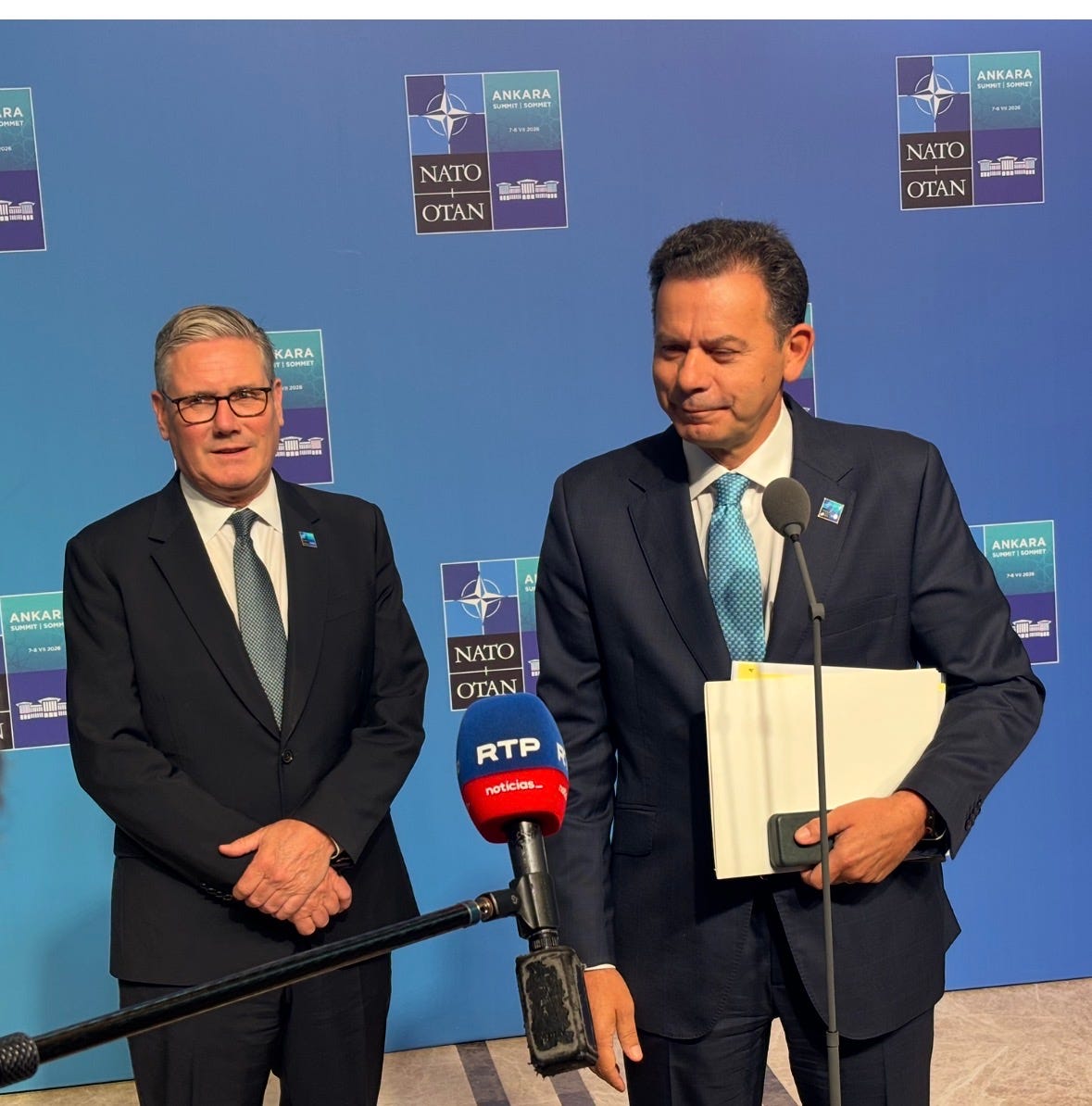
After the frenzied NATO summit in Ankara, I had to log off and take my brain offline for a few days. Therefore, I’m a bit late in sharing my piece for UnHerd from the summit, which is about the Trump administration’s new concept of “NATO 3.0”. This was one of the summit’s main themes, at least as far as the Americans were concerned. NATO 3.0 is an attempt to move beyond the “long 1990s” of “NATO 2.0”–liberal internationalism, humanitarian intervention, out-of-area operations, democracy promotion and so forth. I was a bit surprised at how ideologically-driven the concept of “NATO 3.0” is. I’ll admit that I’m often so distracted by the sheer chaos and unseriousness of Trump that I’ve periodically lost sight of the fact that there are other people in the administration thinking about US foreign policy in terms of grand strategy. It probably won’t surprise many to learn that the author of the NATO 3.0 idea is Elbridge Colby, Under Secretary of War for Policy, who is reviled by many Atlanticists for being a conservative realist/”restrainer”.
The administration has repeatedly pitched NATO 3.0 as a partial return to “NATO 1.0”, i.e. the Cold War-era NATO whose main purpose was to deter the Soviet Union (and crush internal left-wing subversion, but we’ll leave that for another time). As such, “NATO 1.0” had right-wing authoritarianism built into its very foundations. For example, Salazar’s Portugal was a founding member of NATO; the country employed a brutal secret police and banned all opposition parties. But it had immense strategic value and was ideologically aligned, so it was embraced. The idea that NATO is an “alliance of democracies” was therefore always a polite liberal fiction. I think the Trump administration’s concept of “NATO 3.0”–as a reboot of NATO 1.0–asks us to look at Cold War continuities, which is what I tried to do in my piece. I’m sure liberal Atlanticists will hate it, so I must apologize in advance. A final point I tried to drive home in my piece, and which I will repeat here, is that the administration surely sees European acceptance of NATO 3.0 as a rare win at a time when it’s losing on other fronts.
More about the summit over the next few weeks…